Blood in Vomit (Haematemesis): Causes, Symptoms, Treatment & When to Seek Medical Help

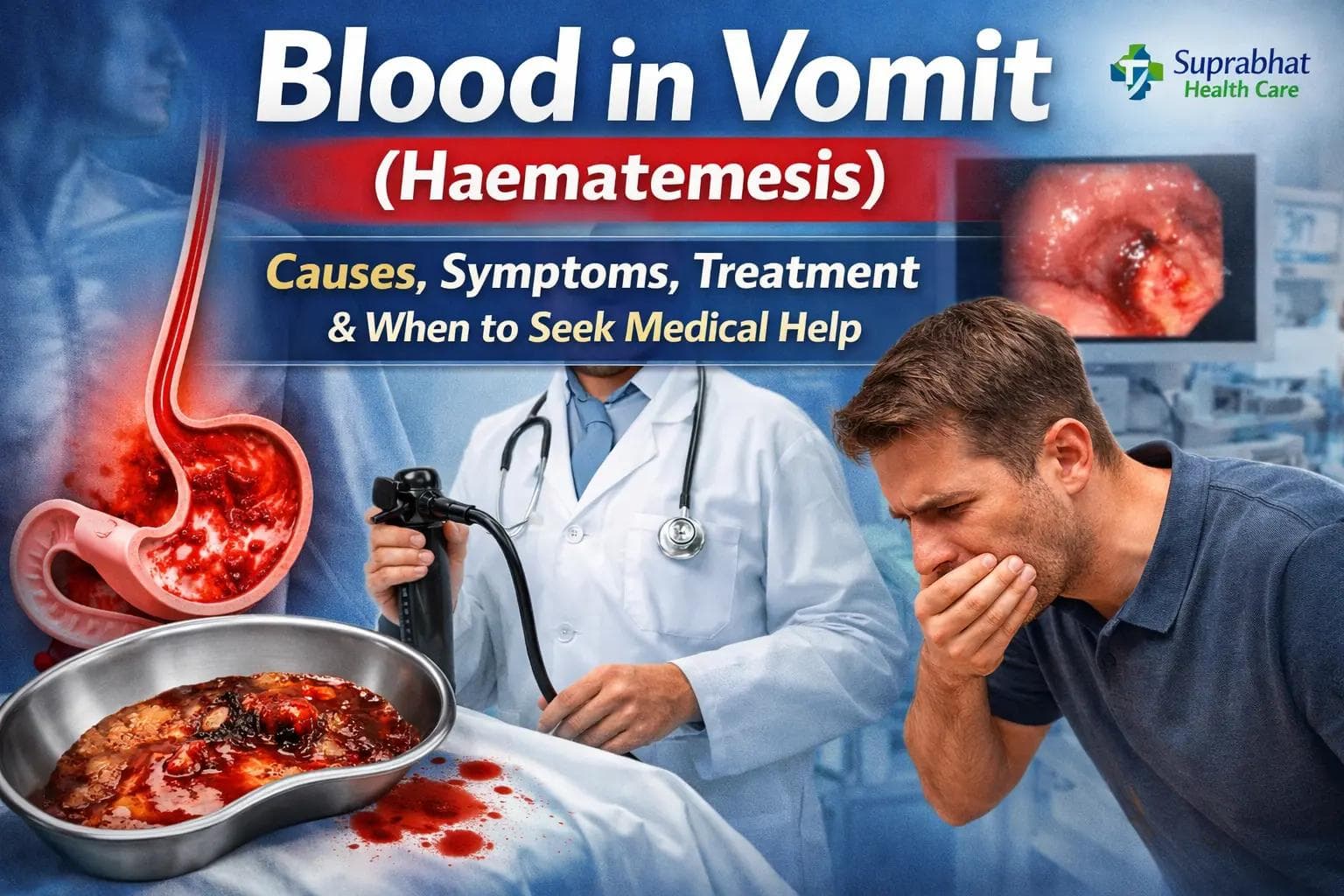
Blood in Vomit (Haematemesis): Causes, Symptoms, Diagnosis, Treatment & When to Seek Medical Help
Seeing blood in vomit can be frightening and should never be ignored. In medical terms, this condition is called haematemesis, which usually indicates bleeding in the upper digestive tract, including the oesophagus (food pipe), stomach, or upper small intestine.
Even a small amount of blood may signal an underlying health issue that requires timely medical attention. While some causes may be mild, others can be serious and require emergency treatment.
At Suprabhat Health Care, we believe early diagnosis and proper treatment can prevent complications and protect long-term digestive health.
What Does Blood in Vomit Look Like?
The appearance of blood in vomit can vary depending on the source of bleeding and how long the blood has been present in the stomach.
Common appearances include:
Bright red blood
Indicates fresh bleeding, usually from the food pipe or stomach.
Dark red or brown blood
Suggests slower bleeding or partially digested blood.
Coffee-ground vomit
Looks dark brown or black due to stomach acid acting on blood.
Blood mixed with food
Blood may appear as streaks or clots along with food particles.
It is important to differentiate vomiting blood from coughing blood. Vomited blood often contains food particles and is associated with nausea.
Causes of Blood in Vomit
Blood in vomit usually occurs due to bleeding in the upper gastrointestinal tract.
1. Stomach-related causes
Gastritis
Inflammation of stomach lining caused by:
- infection
- alcohol use
- excessive painkiller use
- stress
Peptic Ulcers
Open sores in stomach lining that may bleed.
Stomach infections
Certain infections weaken stomach lining and cause bleeding.
2. Oesophageal causes
Oesophageal varices
Swollen veins in the food pipe often linked to liver disease.
Mallory-Weiss tear
Tear in the food pipe caused by repeated vomiting.
Acid reflux (GERD)
Long-term acid irritation can damage the food pipe lining.
3. Liver-related causes
Liver cirrhosis
Scarring of liver increases pressure in veins, causing rupture and bleeding.
4. Other causes
- Swallowed blood from nosebleeds
- Blood thinning medicines
- Alcohol misuse
- Digestive tract injury
- Rarely stomach cancer
Symptoms Associated With Blood in Vomit
Symptoms depend on the underlying cause and amount of bleeding.
Common symptoms include:
- abdominal pain
- nausea
- repeated vomiting
- black stools
- dizziness
- weakness
- rapid heartbeat
- pale skin
- fatigue
Severe symptoms may indicate heavy blood loss and require urgent medical care.
How Doctors Diagnose the Cause
Doctors identify the source of bleeding through several tests.
Medical history and examination
Doctors ask about symptoms, medicines, alcohol intake, and medical history.
Blood tests
Blood tests check haemoglobin levels and infection markers.
Endoscopy
Endoscopy helps doctors directly examine the digestive tract using a camera.
Imaging tests
CT scan or ultrasound may detect structural problems.
Treatment Options
Treatment depends on severity and cause of bleeding.
Emergency stabilisation
If bleeding is severe:
- IV fluids maintain blood pressure
- blood transfusion replaces lost blood
- oxygen support improves breathing
- vital signs are monitored
Endoscopic treatment
Doctors may:
- inject medicines
- apply heat therapy
- place clips
- tie enlarged veins
Medicines
Common medicines include:
- acid reducing medicines
- antibiotics
- anti-nausea medicines
- medicines to reduce vein pressure
Radiological procedures
Interventional radiology helps block bleeding vessels if endoscopy fails.
Surgery
Surgery may be required in serious cases such as:
- perforated ulcer
- tumour
- uncontrolled bleeding
When to Seek Emergency Medical Help
Seek immediate care if you notice:
- large amount of blood
- repeated vomiting blood
- black stools
- dizziness
- difficulty breathing
- rapid heartbeat
- pale skin
Immediate treatment can prevent complications.
Risk Factors
Factors that increase risk include:
- alcohol use
- smoking
- frequent painkiller use
- liver disease
- chronic acidity
- stress
Managing these factors helps prevent complications.
Prevention Tips
Protect digestive health by:
- avoiding alcohol abuse
- limiting painkiller use
- eating balanced diet
- managing acidity early
- avoiding smoking
- treating stomach infections
- reducing stress
Diet After Treatment
Doctors may recommend soft diet such as:
Recommended:
- rice
- bananas
- soups
- boiled vegetables
- curd
Avoid:
- spicy foods
- fried foods
- caffeine
- alcohol
Take the next step in your investigative health journey.
Subscribe to our monthly newsletter for clinical insights, medical breakthroughs, and health tips specifically tailored for our community.