From Floodwater to Health Crisis: Do's and Don'ts Every Assamese Family Should Know


The water has barely started receding in parts of Upper Assam, and honestly, that's when the real worry begins. Not during the flood itself — but right after, when the mud settles, the wells are contaminated, and diseases quietly start doing their damage.
This year has been brutal. Assam's death toll from the 2026 floods has climbed past 50, with thousands still stranded in Nazira and Sivasagar, and lakhs of people across districts like Golaghat, Charaideo, Jorhat, Nagaon, and Kamrup left without safe water or shelter. The Chief Minister himself said the priority now is making sure no epidemic breaks out in the flood-hit areas. That's not a small statement — it tells you how real the health risk is once the flood itself starts to fade from the headlines.
So let's talk about it. Simple questions, honest answers. No jargon, just what actually keeps you and your family safe.
Why Do Floods Cause a Health Crisis in the First Place?
Isn't the flood itself the disaster? Why worry about "after"?
Because floodwater is never just water. It's mixed with sewage, dead animals, chemicals, and whatever the river picked up along the way. Once it touches your drinking water, your food, or an open wound, it becomes a breeding ground for waterborne diseases, skin infections, and mosquito-borne illness. In Assam, where flooding often drags on for weeks, this "after" period is usually longer and more dangerous than the flooding itself.
What Should I Do About Drinking Water During a Flood?
Can't I just boil whatever water I have?
Boiling helps, yes — but only if you're doing it properly. Here's what actually works:
- Boil water for at least one full minute before drinking or cooking with it.
- If boiling isn't possible, use chlorine tablets or water purification drops — ASHA workers and relief camps usually distribute these, so ask for them.
- Store boiled or treated water in a clean, covered container. An open bucket near a flooded courtyard defeats the purpose.
And please, don't assume packaged water is automatically safe either — check the seal before you trust it.
Is It Okay to Wade Through Floodwater If I Need To?
Sometimes there's no choice, right? You have to get to a relief camp or check on family.
Understandable, but avoid it wherever you can. Standing floodwater carries a real risk of leptospirosis, a bacterial infection that spreads through contact with contaminated water, especially if you have even a small cut on your foot. If wading through is unavoidable, wear rubber boots or at least covered footwear, and wash your legs thoroughly with soap the moment you're out.
What About Food — What's Safe to Eat?
Everything in the kitchen got wet. Do I really have to throw it all away?
This is the one people resist the most, but yes — any food that touched floodwater should go. That includes grains, vegetables, and even sealed jars if the water got under the lid. Mould and bacteria don't always show themselves, and by the time symptoms appear, the damage is done. Stick to dry rations distributed at relief camps, or food cooked fresh with clean water.
How Do I Protect My Family From Mosquito-Borne Diseases?
With so much standing water everywhere, aren't mosquitoes going to be a nightmare?
Exactly — and this is where a lot of people let their guard down. Stagnant water after floods becomes a mosquito nursery within days, raising the risk of dengue and malaria on top of everything else. Use mosquito nets, especially for children and the elderly, even inside relief camps. If you have any control over your surroundings, don't let water pool in containers, tyres, or broken pots once the main flood recedes.
Should I Worry About Skin Infections and Wounds?
A scrape doesn't sound like a big deal though?
In flood conditions, it becomes one. Fungal infections and wound infections spread fast when skin stays wet and dirty for hours. Dry your feet and hands whenever you get the chance, even if it's just with a clean cloth. Cover any cut with a waterproof bandage, and if it starts looking red or swollen, don't wait it out — get it checked at the nearest medical camp.
What Are the Warning Signs I Shouldn't Ignore?
How do I know when it's "just tiredness" versus something serious?
Trust your gut here. Fever, persistent diarrhoea, vomiting, or unusual fatigue after flood exposure aren't things to sit on. Assam's health department typically ramps up mobile medical camps during flood season specifically because early treatment stops outbreaks before they spread through a relief camp or a village. If a child, elderly person, or pregnant woman shows any of these signs, treat it as urgent, not "let's wait and see."
Is It Safe to Return Home Once the Water Recedes?
The water's gone down — can we just go back and start cleaning up?
Not immediately, and not without precautions. A home that's been submerged often has weakened walls, exposed wiring, or contaminated wells. Before you move back in:
- Get the water and electricity checked before using either.
- Clean the house with disinfectant, not just water — mud left behind carries the same contamination the floodwater had.
- Get your well or hand pump tested before drinking from it again, even if it looks clear.
What Can I Do to Help, Even If My Own Area Wasn't Flooded?
Feels wrong to just watch the news and do nothing.
That instinct is a good one. Donating clean drinking water, ORS packets, and basic hygiene kits to relief camps genuinely helps more than people realise — dehydration and hygiene-related illness are often bigger killers than the flood itself in the weeks that follow. If you're in Guwahati or elsewhere in Assam, local NGOs and district administrations are usually coordinating relief drives; even a small contribution reaches someone who needs it.
Assam floods almost every year, and every year the pattern repeats — the water rises, the water falls, and then the quieter crisis begins. The Brahmaputra isn't going anywhere, and neither is the risk. But a lot of the suffering that follows a flood isn't from the water itself — it's from what we do, or don't do, in the days after. That part, at least, is something we can control.
The Suprabhat Healthcare Team consists of experienced and professional doctors, healthcare specialists, medical advisors, and support staff dedicated to delivering trusted and patient-centered healthcare services. Our team works with compassion, medical expertise, and a commitment to providing quality healthcare support for individuals and families.
We believe in maintaining the highest standards of professionalism, safety, and transparency in every service we provide. All medical guidance and healthcare support are handled by qualified professionals with a focus on patient well-being and care excellence.
To ensure trust and authenticity, Suprabhat Healthcare operates with verified business documentation, including Trade License and other required certifications and registrations. Our goal is to make healthcare more accessible, reliable, and convenient through modern technology and professional medical support.
Frequently Asked Questions
1. Why do floods increase the risk of diseases?
2. Is boiled water safe to drink during floods?
3. Which diseases are common after floods in Assam?
4. What should I avoid eating after a flood?
5. When should I seek medical attention after flood exposure?
Recent Insights & Uploads

Which Blood Tests Should I Get for a Full Body Health Checkup in Dibrugarh?
Different types of blood tests can help identify varying medical conditions before they progress into something serious. Examples include a complete blood count, creatinine, lipid profile, blood sugar, and liver function test.

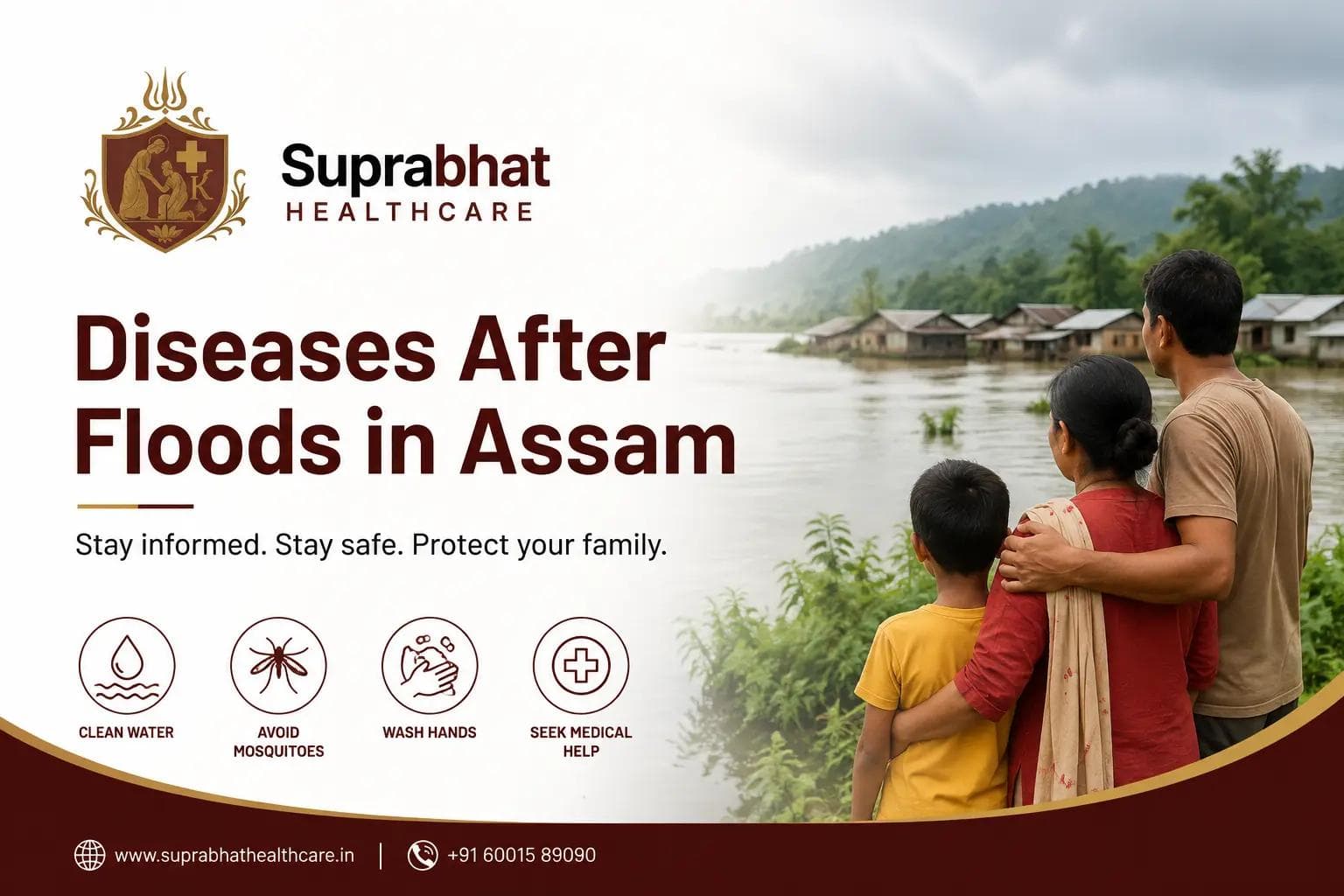
What Diseases Spread After a Flood? A Complete Health Guide for Assam Families (2026)
Floods don't end when the water recedes. Learn about the most common diseases that spread after floods in Assam, their symptoms, and practical steps families can take to stay safe.
Take the next step in your investigative health journey.
Subscribe to our monthly newsletter for clinical insights, medical breakthroughs, and health tips specifically tailored for our community.